





Dodge Challenger Engine Options: Power, Performance and What Buyers Should Know
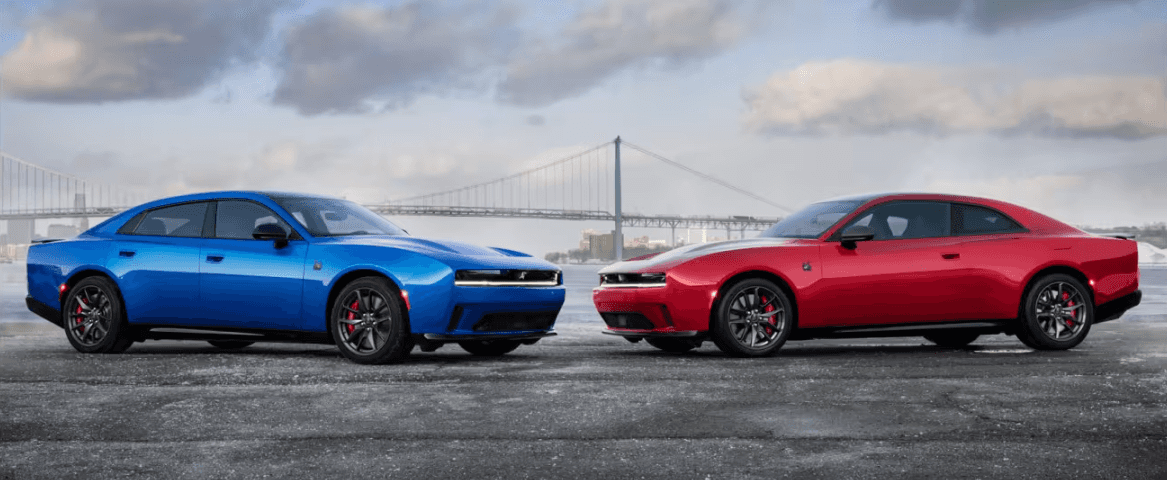
The Dodge Challenger built its reputation as one of the most recognizable muscle cars in American history largely because of what’s under the hood. Pick the right engine, and this car becomes whatever you need it to be, a comfortable daily driver with an aggressive look, or a track-capable beast that barely tolerates street speeds.
Understanding the Dodge Challenger engine options across the trim lineup is where a smart buying decision starts, and since Dodge ended Challenger production on December 31, 2023, that decision now plays out entirely in the used market. If you’re ready to start comparing, browse our used vehicle inventory at Findlay CDJR while you read through what each engine actually delivers.
Dodge Challenger Engine Lineup: A Buyer’s Guide to the Final Generation
The Challenger’s engine range runs from a capable V6 all the way up to a supercharged V8 that produced some of the highest horsepower numbers ever offered in a production muscle car. Each powertrain has its own personality, paired with specific trims, drivetrains, and available features. Knowing what separates these engines, and what each one demands from a driver, is the difference between buying the right car and buying the wrong one.
Challenger Production Has Ended: What This Means for Shoppers
Dodge officially ended Challenger production on December 31, 2023, closing the chapter on one of the last traditional muscle car nameplates in the segment as Stellantis shifted its performance lineup toward electrification. The new Dodge Charger took its place.
For shoppers, this creates real urgency: new inventory is no longer being built, so the pre-owned market is now the primary source for most buyers. Values on well-maintained, lower-mileage examples have stayed strong, particularly for higher-output models, so waiting rarely works in a buyer’s favor.
3.6L Pentastar V6: The Practical Entry Point (SXT and GT Trims)
The 3.6L Pentastar V6 exists for buyers who don’t need the loudest car on the street. Found in the SXT and GT trims, this engine brings the Challenger’s broad shoulders and iconic styling without the fuel and insurance costs that come with the V8s. Commuters and first-time muscle car owners tend to gravitate toward it, and anyone who spends more time on the highway than at the track will find the V6 makes a convincing case.
Horsepower, Torque, and Fuel Economy
The Pentastar V6 produces 303 hp and 268 lb-ft of torque, plenty for everyday driving and the occasional burst of acceleration. It pairs with an eight-speed automatic transmission. Of every engine in the lineup, the V6 is the most fuel-efficient and the cheapest to insure, making it a practical choice for daily use without giving up the muscle car feel entirely.
Rear-Wheel vs. All-Wheel Drive on V6 Models
One advantage unique to the V6 lineup is all-wheel drive, the only drivetrain configuration in the Challenger range to offer it. The GT trim, in particular, gave buyers the AWD option, adding real traction on wet or snowy roads. Rear-wheel drive stays the default for the purist-oriented SXT, delivering the traditional muscle car balance enthusiasts expect. For buyers in Findlay, Ohio, where winters can turn unpredictable fast, AWD on the GT was a genuine practical advantage.
5.7L HEMI V8: The R/T Trim’s Muscle Car Foundation
Step up to the R/T trim and the car’s character shifts noticeably. The 5.7L HEMI V8 brings the deep, burbling exhaust note most people picture when they think of a Challenger, along with power to match. This engine anchors the lineup, landing right in the sweet spot between accessible performance and raw V8 excitement.
Performance Character and Everyday Usability
The 5.7L HEMI produces 375 hp and 410 lb-ft of torque, good for a 0-60 mph run in roughly 5.0 seconds. What makes this engine work so well day to day is its range: manageable and predictable around town, then noticeably livelier the moment you hit the highway or push it on a weekend drive.
It also includes Fuel Saver Technology, which shuts down four cylinders during light-load cruising to help efficiency, and it’s offered with either an automatic or a manual transmission depending on the model year.
6.4L 392 HEMI V8: Scat Pack’s Track-Ready Punch
The Scat Pack trim marks a real jump in seriousness. The 6.4L 392 HEMI V8 produces 485 hp and 475 lb-ft of torque, enough for a 0-60 mph time of about 4.2 seconds, and the car is built around that output with hardware to back it up. This is where the Challenger stops being just a capable daily driver and starts feeling like a genuinely track-capable machine that happens to still carry a license plate.
Handling, Braking, and Suspension Upgrades
A bigger engine is only part of the story here. The Scat Pack also gets Brembo performance brakes and a sport-tuned suspension, riding on wider standard wheels with an even broader track in Widebody configurations. These additions let the car handle the 392’s power without feeling loose or unpredictable, so the Scat Pack can be pushed harder through corners without the driver having to fight the chassis to keep up.
Supercharged 6.2L HEMI V8: SRT Hellcat and Beyond
The SRT Hellcat operates in a different conversation entirely. Powered by a supercharged 6.2L HEMI V8, it produced 717 hp and 656 lb-ft of torque in standard form, enough for a 0-60 mph sprint in about 3.7 seconds. This isn’t a car for casual driving, and it demands a driver who respects what it’s capable of.
Hellcat Redeye and Super Stock Performance Differences
The Hellcat Redeye pushed the supercharged formula further, reaching 797 hp through a larger supercharger and revised internals, which translated to a 0-60 mph time of roughly 3.6 seconds. The Super Stock then took that platform and dialed in drag-strip-specific tuning, producing 807 hp and 707 lb-ft from the same supercharged 6.2L engine, backed by street-legal drag radials and launch control, plus a dedicated drag mode. Widebody treatment, available on the R/T Scat Pack as well as Hellcat and Redeye trims, added flared fenders and wider rear tires for extra stability at speed.
Demon 170: A Limited Farewell Edition
For 2023, Dodge closed out the Challenger’s run with the Demon 170, an extremely limited “Last Call” edition producing 1,025 hp on E85 fuel and capable of 0-60 mph in about 1.66 seconds. This was never part of the standard lineup, and given its rarity, buyers shouldn’t expect to find one easily on typical used-car lots. It’s worth knowing about as context for how far the platform was pushed, but it’s not a realistic shopping target for most Challenger buyers.
Fuel Economy and Insurance Considerations by Engine
Fuel and insurance costs are real factors that don’t always get enough attention during the buying process. The V6 is the most economical choice, both at the pump and on your insurance bill. The 5.7L HEMI bumps those costs up moderately. The 6.4L and supercharged 6.2L engines bring meaningfully higher fuel consumption and often call for premium fuel and more specialized maintenance. Insurers also treat high-horsepower muscle cars as elevated risk, and full coverage on a supercharged Hellcat-family variant can run roughly two to three times higher than on a comparable V6.
The table below summarizes how the lineup compares.
| Engine/Powertrain | Horsepower/Torque | Transmission | 0–60 Time | EPA Fuel Economy (city/hwy) |
|---|---|---|---|---|
| 3.6L Pentastar V6 (SXT/GT) | 303 hp / 268 lb-ft | 8-speed automatic | ~6.0 sec | 19/30 MPG (RWD) |
| 5.7L HEMI V8 (R/T) | 375 hp / 410 lb-ft | 6-speed manual or 8-speed automatic | ~5.0 sec | 15/23 MPG |
| 6.4L 392 HEMI V8 (Scat Pack) | 485 hp / 475 lb-ft | 6-speed manual or 8-speed automatic | ~4.2 sec | 14/23 MPG |
| 6.2L Supercharged (SRT Hellcat) | 717 hp / 656 lb-ft | 8-speed automatic | ~3.7 sec | 13/22 MPG |
| 6.2L Supercharged (Hellcat Redeye) | 797 hp / 707 lb-ft | 8-speed automatic | ~3.6 sec | 13/22 MPG |
| 6.2L Supercharged (SRT Super Stock) | 807 hp / 707 lb-ft | 8-speed automatic | ~3.3 sec | 13/21 MPG |
Matching an Engine and Trim to Your Driving Needs
A Hellcat is overkill for most buyers. The 5.7L HEMI R/T covers what the overwhelming majority of people actually do with a muscle car, from highway commuting around Findlay, Ohio to the occasional spirited run and turning heads in a parking lot.
The Scat Pack makes sense for drivers who want extra performance margin backed by real chassis upgrades to support it on a weekend or track day. The V6 suits anyone who loves the Challenger’s look but wants lower long-term costs and the security of AWD through winter. And the supercharged variants are for buyers who made up their minds the moment they heard 717 hp or more.
Finding a Pre-Owned Challenger at Findlay CDJR
With Challenger production now finished, the used market is where most new owners will find their car. Findlay Chrysler Dodge Jeep Ram, located at 10305 US-224 in Findlay, Ohio, keeps a selection of pre-owned vehicles including Dodge Challengers across various trims and configurations, though availability naturally varies by engine and trim, so it’s worth checking with the dealership directly.
Browse our used vehicle inventory to see what’s currently on the lot, and visit our research hub if you want to dig deeper into specs, trim differences, or ownership costs before you decide.
Service, Financing, and Getting in Touch
The service and parts departments at Findlay CDJR matter too for Challenger ownership, especially on performance models that benefit from attentive maintenance. Certified technicians handle everything from routine oil changes to more involved mechanical work using genuine OEM parts.
Sales hours run Monday through Thursday from 9:00 AM to 7:00 PM, Friday from 9:00 AM to 6:00 PM, and Saturday from 9:00 AM to 3:00 PM. Service is available Monday through Friday, 8:00 AM to 5:00 PM. You can also contact our team by phone at 419-423-1715 or contact us online.
Frequently Asked Questions About Dodge Challenger Engines
What Engine Comes in a Base Challenger?
The base Challenger comes with the 3.6L Pentastar V6, producing 303 hp and 268 lb-ft of torque. It’s paired with an eight-speed automatic transmission and rear-wheel drive as standard, with all-wheel drive available on the GT trim. This engine gives buyers a solid starting point for the Challenger experience without the full commitment of a V8.
Which Challenger Engine Offers the Best Value Used?
The 5.7L HEMI V8 in the R/T trim consistently offers the best value in the used Challenger market. It delivers genuine V8 performance, an authentic exhaust note, and strong long-term reliability, all while typically costing less to insure and maintain than the Scat Pack and SRT Hellcat variants. For buyers who want the core muscle car experience without overpaying, a well-maintained R/T is the right call. That said, if condition and budget allow, a used Scat Pack closes the gap quickly between street performance and track capability.
0 comment(s) so far on Dodge Challenger Engine Options: Power, Performance and What Buyers Should Know